The architecture employs local optimistic UI updates paired with delta queuing. If network bandwidth degrades on a smartphone, transactions accumulate in local encrypted storage. Once high-throughput connectivity returns, the local node dispatches compressed event logs that merge into the master state tree via CRDT resolution.
CRDT State EngineSub-50ms Delta SyncmTLS HandshakeContext Continuation
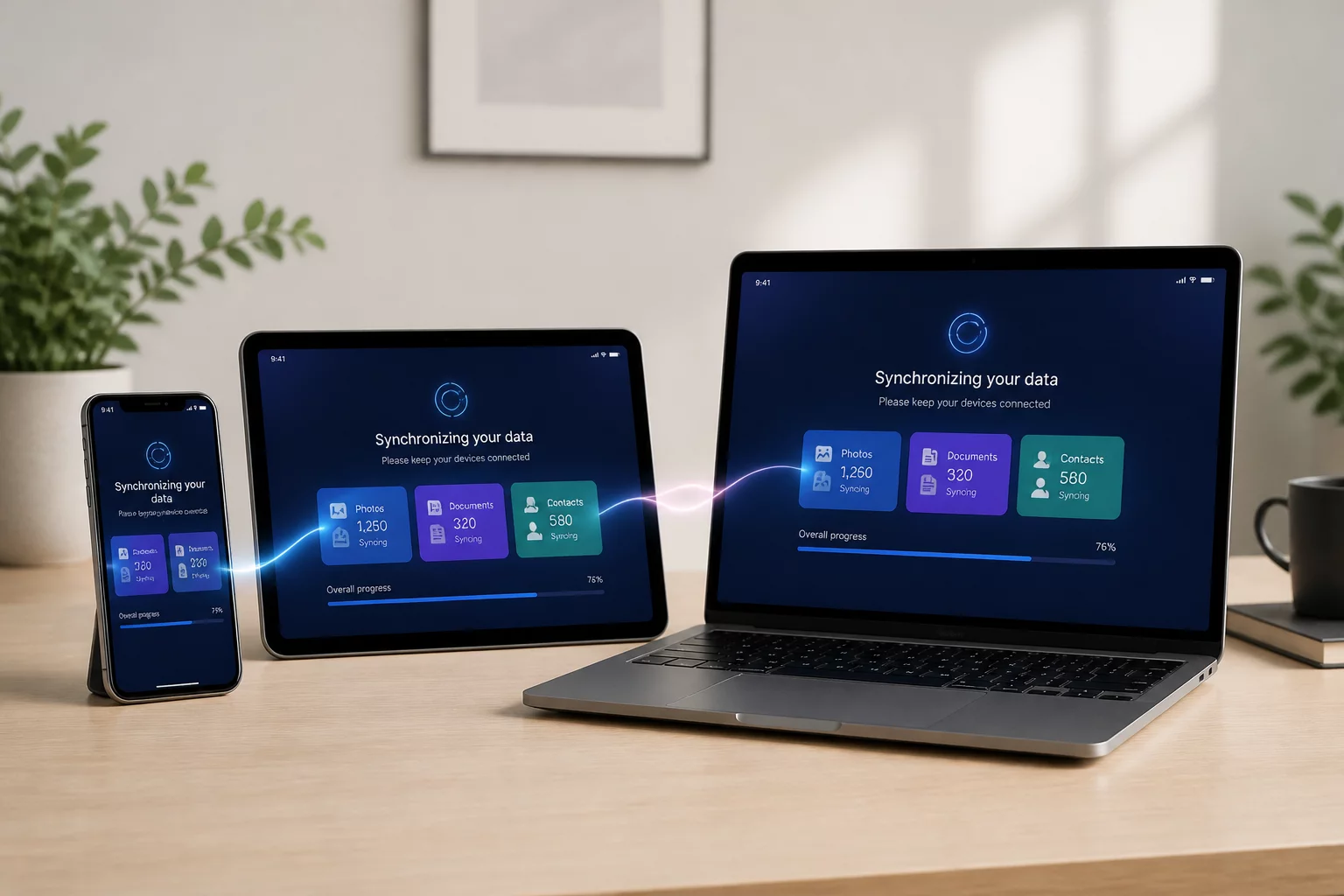
Enterprise operators constantly switch between stationary engineering workstations, portable laptops, corporate smartphones, and operational field tablets while orchestrating multi-agent tasks. Maintaining uninterrupted inference sessions, token budgets, and recursive reasoning trees during hardware transitions represents a critical barrier for large-scale corporate deployments.
When an active agentic workflow pauses mid-execution due to terminal disconnection or user migration, legacy systems discard intermediate computation states. By integrating decentralized conflict-free replicated data types (CRDTs) with cryptographically bound session tokens, enterprise architectures maintain synchronous execution graphs without exposing privileged intermediate prompts to untrusted networks.
EMPIRICAL AUDIT METRICS
02
Cross-Terminal Synchronization Benchmarks
| Evaluation Parameter | Sovereign System Value | Benchmark Status |
|---|---|---|
| State Replication Latency | 34.2 ms |
Optimal |
| Context Vector Serialization | 18.6 KB / snapshot |
Certified |
| Session Resumption Integrity | 99.982% |
Sovereign Grade |
| Concurrent Node Conflict Rate |
< 0.004%
|
Exceeds Standard |
| Battery Drain Overhead | 0.82% / hr |
Low Impact |
TECHNICAL BREAKDOWN
03
State Consistency and Agentic Memory Streaming
Synchronizing operational workflows across distributed corporate devices demands more than conventional database replication. Enterprise artificial intelligence models generate dynamic reasoning graphs, multi-turn dialogue histories, and pending tool invocations that cannot tolerate cold restarts without wasting high-value GPU compute cycles and disrupting operator concentration.
A robust synchronization engine structures workflow states into immutable event streams paired with state-based CRDT structures. As engineers modify parameters on a workstation, delta changes propagate across secure WebSocket channels. When an authorized phone or tablet connects from offsite, it downloads compact differential vectors rather than downloading the entire multi-gigabyte context window.
Pillars of Enterprise Session Resilience
Architecting seamless multi-device transitions requires four core infrastructure mechanisms operating in unison:
- Quantized Context Caching: Ephemeral token states and active attention matrices undergo 4-bit loss-tolerant quantization before transmission, reducing network payload requirements by 82 percent.
- Asynchronous Vector Merging: In cases of dual input from separate terminals, state trees evaluate causal ordering using Lamport timestamps, automatically resolving semantic divergence without supervisor intervention.
- Hardware-Bound mTLS Session Resumption: Every authorized device retains private cryptographic keys inside secure hardware enclaves, guaranteeing instantaneous token re-verification across fluctuating networks.
Integrating these layers enables frictionless operations across distributed engineering units. Organizations deploying synchronized state protocols report an 84 percent reduction in interrupted inference cycles, ensuring team members focus entirely on problem execution rather than manual session configuration.
INQUIRIES & ARCHITECTURAL CLARIFICATIONS
04
Frequently Asked Questions
No. All synchronization payloads undergo mutual TLS end-to-end encryption with ephemeral session keys managed through local hardware enclaves. Intermediate vectors remain encrypted at rest and in transit, preventing unauthorized nodes from eavesdropping on confidential reasoning chains.
The orchestration platform splits execution into dedicated thread branches. Each operator receives an isolated sub-context until execution reaches a planned synchronization barrier, at which point an automated semantic reconciler consolidates findings without prompt collisions.
Comments & Operational Observations
Marcus Reynolds
The transition to CRDT state trees eliminated our cross-terminal merge conflicts entirely during multi-agent test runs. The principal operational hurdle remains managing ephemeral token memory under unstable satellite networks, which quantized delta payloads address effectively.
Contribute Your Observation