Insight runs exclusively within isolated sovereign cloud clusters or on-premise hardware security enclaves. Inference requests are processed ephemerally in zero-knowledge memory without logging proprietary boardroom inputs to public model training sets.
Boardroom IntelligencePredictive Latency <140ms< /span>Sovereign Enclave SecurityAgentic Simulation Core
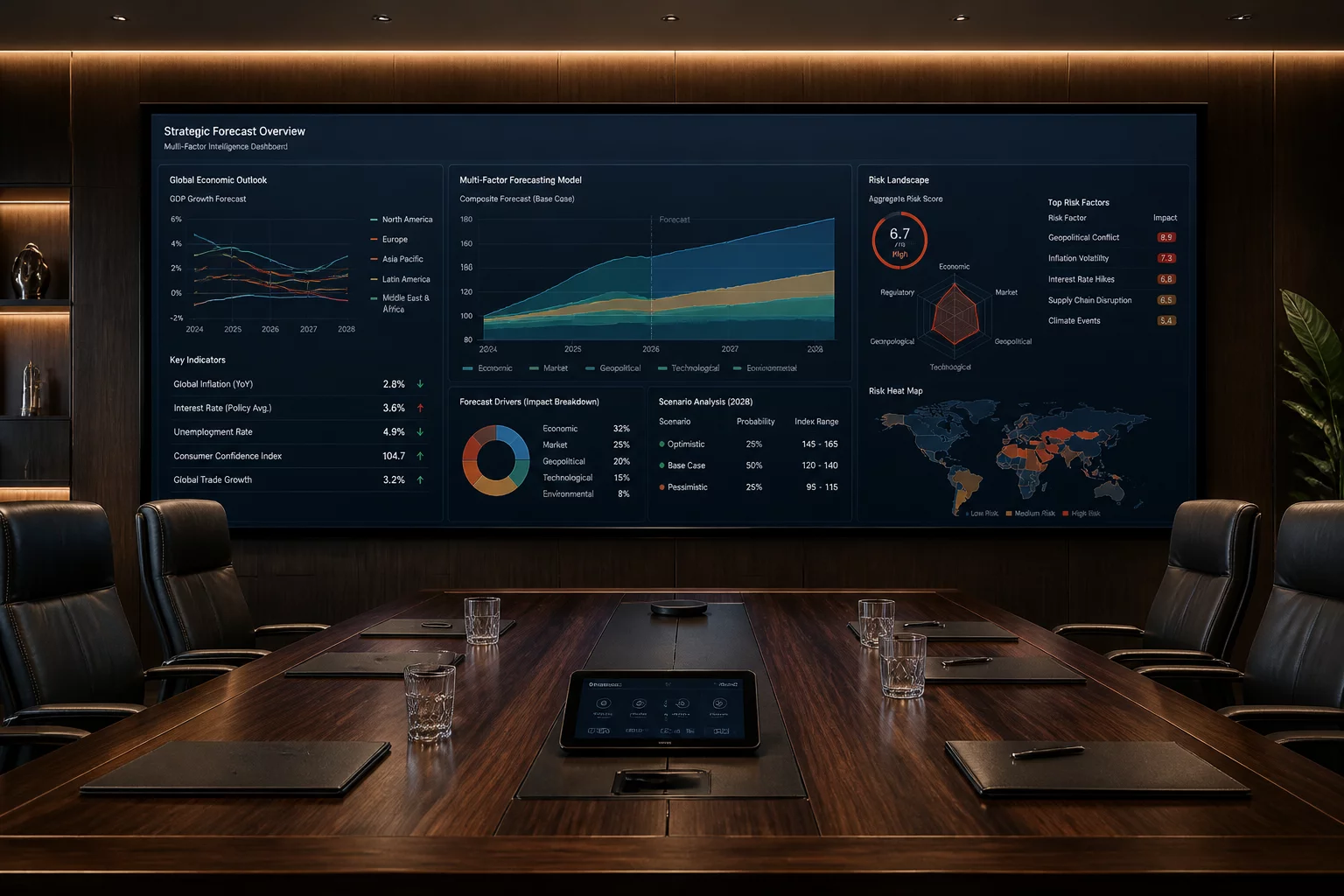
Corporate governance in high-velocity markets routinely stumbles over static reporting cycles, where strategic reviews rely on quarterly retrospectives rather than live operational telemetry. G42 Inception42 addresses this systemic blind spot with the launch of Insight, an enterprise analytics engine purpose-built for executive committees and boards of directors.
Insight couples sovereign foundation model backbones with real-time multi-source data ingestion, enabling executive directors to stress-test capital allocation, regulatory exposure, and supply-chain vulnerabilities during live boardroom deliberations. Instead of waiting weeks for advisory slide decks, leadership teams can simulate macroeconomic shocks against their enterprise data within seconds.
EMPIRICAL AUDIT METRICS
02
Insight Platform Core Architecture & Governance Benchmarks
| Evaluation Parameter | Sovereign System Value | Benchmark Status |
|---|---|---|
| Decision Latency Optimization | 138 ms |
Production Verified |
| Data Sovereignty Compliance | Tier-IV In-Country Isolation |
Full Sovereign Audit |
| Autonomous Cross-Source Ingestion | 4.2M records/sec |
Stress Benchmark Pass |
| Hallucination Guardrail Tolerance |
< 0.002% Deviation
|
Rigorous Constraint |
| Multi-Agent Consensus Layer | Tri-Agent Byzantine Voting |
High Integrity Tier |
TECHNICAL BREAKDOWN
03
Architectural Anatomy of Sovereign Decision Systems
Conventional executive business intelligence tools behave like glorified spreadsheets, summarizing historical ledger entries without contextualizing systemic counterparty risks or competitive counter-moves. Insight dismantles this paradigm by deploying autonomous analytical agents that continuously crawl enterprise ERP silos, real-time maritime logistics trackers, and regional legislative registries.
During closed-door governance sessions, the system runs in an ambient advisory mode. Directors query the platform through conversational Arabic and English prompts, receiving dynamic probabilistic projections rather than static graphs. If a board member questions how a sudden 15% increase in energy tariffs impacts operational margin across GCC facilities, Insight re-calculates forward cash flows in sub-second timeframes.
Three Critical Functional Pillars for Enterprise Boards
Inception42 engineered Insight around rigorous cryptographic isolation and auditability, ensuring sensitive executive deliberations remain mathematically firewalled from broader enterprise networks:
- Adversarial Scenario Generation: Automated agents constantly construct worst-case liquidity and regulatory scenarios to challenge executive consensus before capital commitments are finalized.
- Zero-Leakage Sovereign Enclaves: All model reasoning executes inside zero-knowledge confidential compute enclaves, preventing corporate IP leakage even across internal IT operations.
- Traceable Deliberation Logs: Every recommendation is tied to verifiable mathematical formulas and immutable ledger timestamps, establishing bulletproof accountability for audit committees.
As corporate boards navigate increasingly volatile cross-border regulatory shifts, tools like Insight redefine fiduciary diligence. Boardrooms operating on quarterly retrospectives will find it nearly impossible to outmaneuver institutions armed with continuous, sovereign predictive orchestration.
INQUIRIES & ARCHITECTURAL CLARIFICATIONS
04
Frequently Asked Questions
Yes. The architecture features dedicated zero-trust connector pipelines that sync bi-directionally with platforms like SAP S/4HANA, Oracle Cloud ERP, and proprietary institutional databases without requiring wholesale schema re-engineering.
Insight enforces a tri-agent Byzantine consensus mechanism where three specialized models independently calculate forecasts, cross-verify source equations against audited ledgers, and reject any variance exceeding 0.002% before displaying outputs to the board.
Comments & Operational Observations
Marcus Reynolds
The shift toward autonomous agent ecosystems introduces structural risk that legacy governance frameworks fail to anticipate. Capital allocation models must integrate these operational variables before institutional scaling.
Contribute Your Observation